

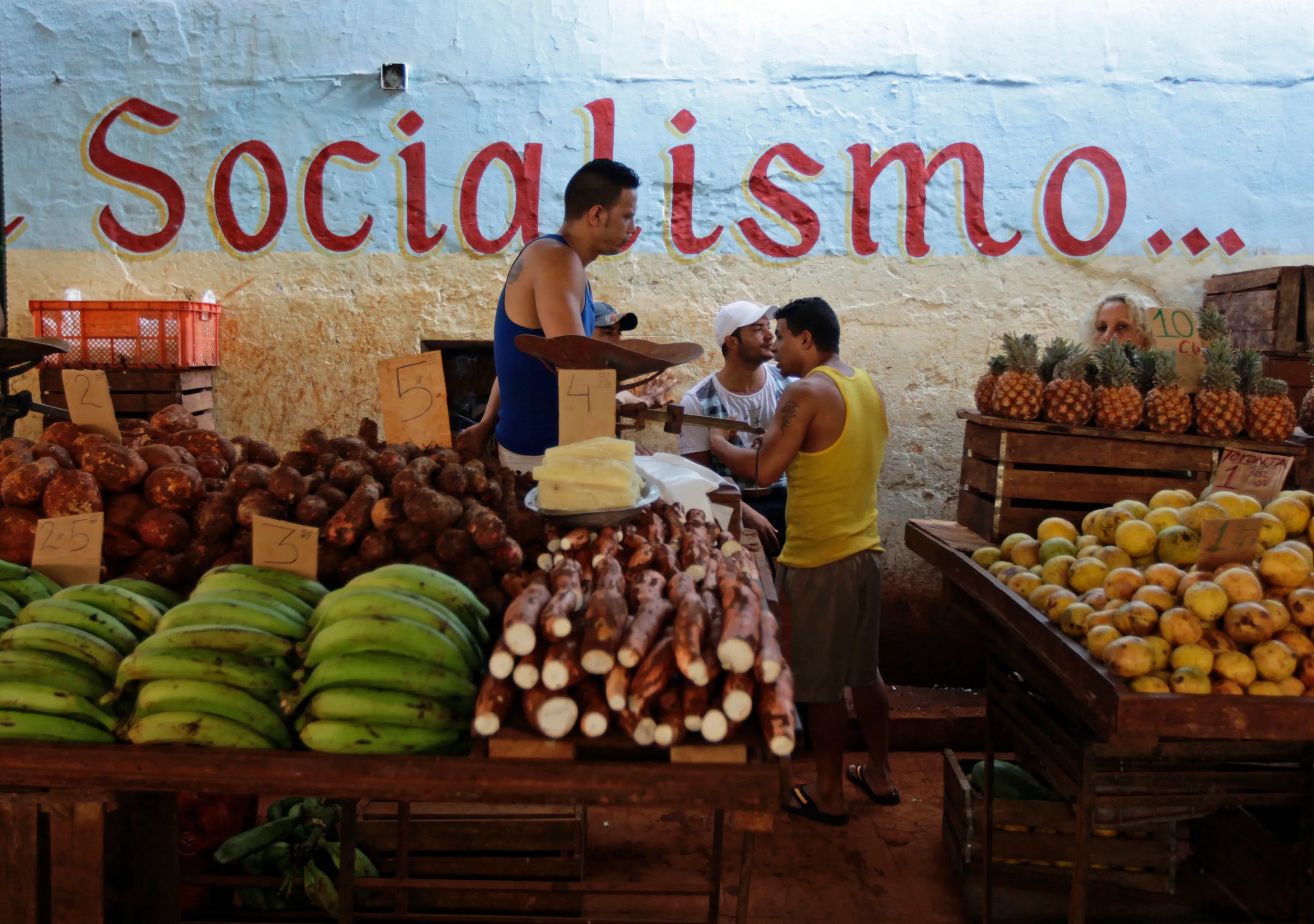
The United States says it wants regime change in Cuba, but the picture is more complex than a simple morality play. Washington’s demands reflect a long, fraught history with Havana, a desire to finish the job started in Venezuela, and a bet that Cuba’s fragile economy and constrained private sector can no longer absorb the pressure.
In a first part of a two-piece series, we look at how we got there, why Washington talks about regime change (but is unlikely to impose it outright), and what that tells us about the kind of Cuba the US actually wants.
A long, toxic relationship
US–Cuba relations have been shaped by trauma on both sides: the 1959 revolution, US-backed exile invasions, the embargo, and the 1962 missile crisis. After Fidel Castro overthrew Fulgencio Batista and nationalised US property, Washington responded with covert operations and a sweeping trade embargo aimed at forcing political change.
For half a century, the logic was straightforward: isolate, strangle, wait for collapse.
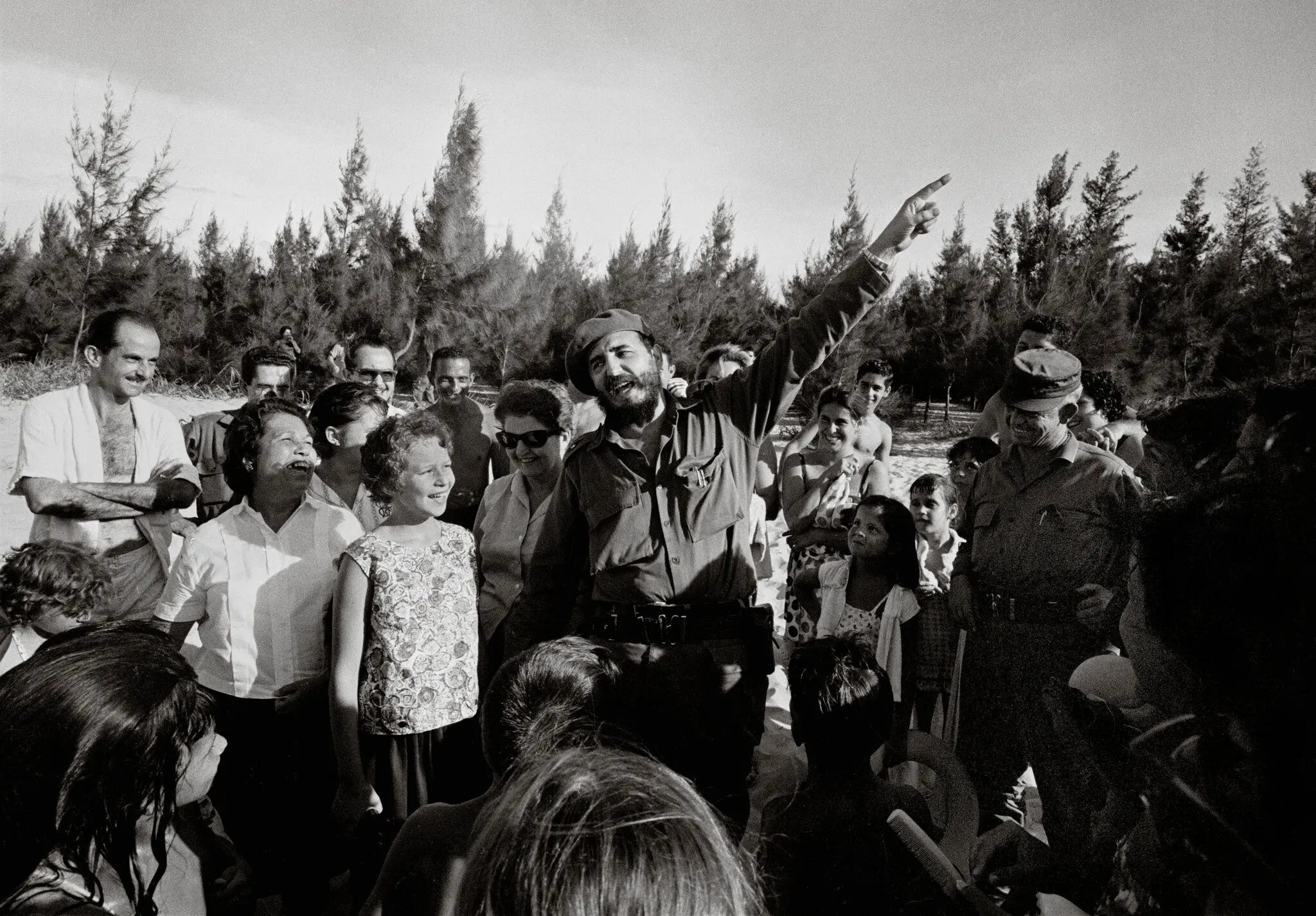
The relationship briefly thawed under Barack Obama, who restored diplomatic relations, loosened travel and remittance rules and quietly encouraged market‑oriented reforms. Under Trump’s first term, that opening was reversed; his second term has gone much further, combining a “total pressure” embargo with oil interdictions and migration restrictions designed explicitly to push the communist regime “into extinction.”
This shift is anchored in a revived Monroe Doctrine: an assertion that the US will “reassert and enforce” its dominance in the hemisphere, treating Cuba and Venezuela as linked problems to be solved together.
Maduro’s capture in Caracas and the cutoff of Venezuelan oil to Cuba were meant not just to end a symbiotic alliance, but to demonstrate that Washington is again willing to use hard power to reshape its “backyard”.
Why Cuba is not Venezuela
Trump and Marco Rubio talk about “Venezuela first, Cuba next”, but the two regimes are structurally different in ways that matter for any transition.
Venezuela is a personalist petro‑state centred on Nicolás Maduro and a narrow ruling clique, presiding over a fragmented security apparatus and a relatively pluralist political culture that survived into the Chávez era. This made back‑channel bargaining with individual figures like Delcy Rodríguez more feasible, and created cracks that external pressure could widen.
Cuba, by contrast, is more akin to a collective one‑party regime built over six decades, with the Communist Party and the armed forces at its core. Raúl Castro, though formally retired, still commands loyalty across the military hierarchy. Through the GAESA conglomerate, generals effectively run much of Cuba’s hard‑currency economy, with senior officers controlling tourism, retail, real estate, ports and much of the formal economy.
Repression is disciplined: protests in July 2021 were crushed by coordinated security forces, and around a thousand people remain in prison, with no organised opposition waiting in the wings.
In Venezuela, corruption and indiscipline hollowed out state capacity; in Cuba, the machinery of control still “works”, even as the economy crumbles.
That makes sudden collapse less likely, but also means that any serious change will require the buy‑in—or at least the acquiescence—of the military and party elite, not just the removal of one leader.
In other words, President Díaz‑Canel is expendable; the regime is not.
Why Washington talks about regime change
Officially, Trump’s latest national security directive brands Cuba an “unusual and extraordinary threat” that aids hostile states, terrorist groups and US adversaries such as Russia, China and Iran. Marco Rubio, now secretary of state, frames US policy as support for “peaceful change”, but makes clear that the end goal is a Cuba with free elections, released political prisoners and no foreign intelligence bases aimed at the US.
There are three overlapping motives:
Strategic: China’s expanding intelligence footprint in Cuba — signal interception facilities, cyber units and possible satellite tracking sites — has alarmed US defence planners, as has Russia’s renewed use of the island for surveillance and naval access.
Domestic politics: Trump courts Cuban‑American voters by promising to do what John F. Kennedy never did: “liberate” Cuba, and let exiles return to a “free” homeland.
Regional signalling: The Maduro operation was meant as a warning to other left‑wing or authoritarian governments in the region. Squeezing Havana is part of showing that the Monroe Doctrine once again has teeth.
Yet even in this maximalist rhetoric, there is caution: an armed intervention in Cuba could drag the US into a morass and trigger exactly the kind of mass migration crisis Washington fears. That is why current tactics combine suffocating sanctions with calibrated humanitarian aid and quiet talks, rather than a rush to invasion.
The rhetoric is maximalist; the strategy, so far, is not.
A besieged but dynamic private sector
One reason US officials talk about regime change now is that Cuba’s economic model is visibly failing — while an embryonic private sector has shown it can keep parts of the economy alive despite the crisis.
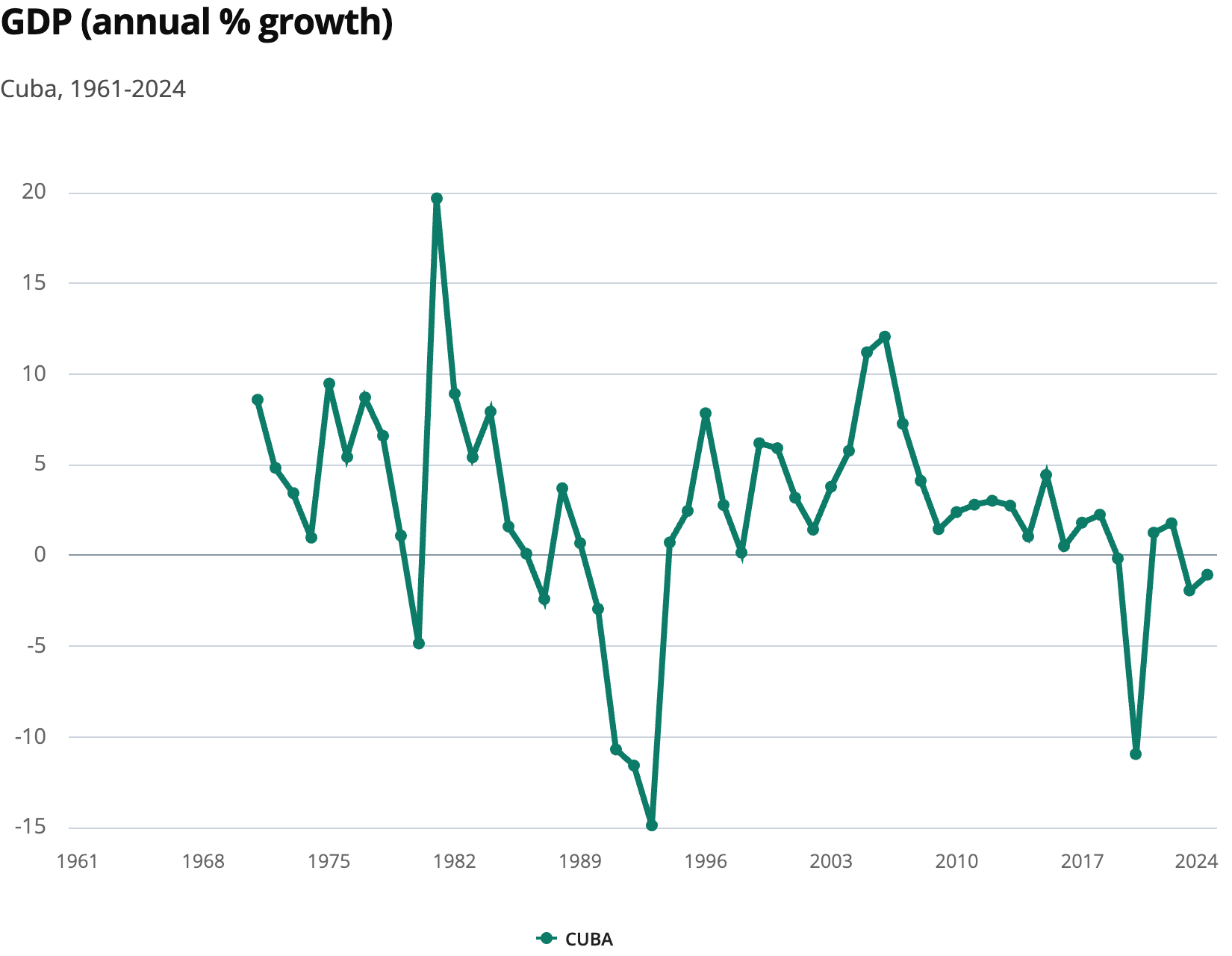
The state sector is in deep trouble. GDP has contracted repeatedly since 2018, inflation spiked to around 70% in 2021, and energy blackouts, collapsing infrastructure and severe food shortages have become routine.
Against that bleak backdrop, Cuba’s private actors — self‑employed workers and new micro, small and medium‑sized enterprises (MSMEs) — have been one of the few growth stories.
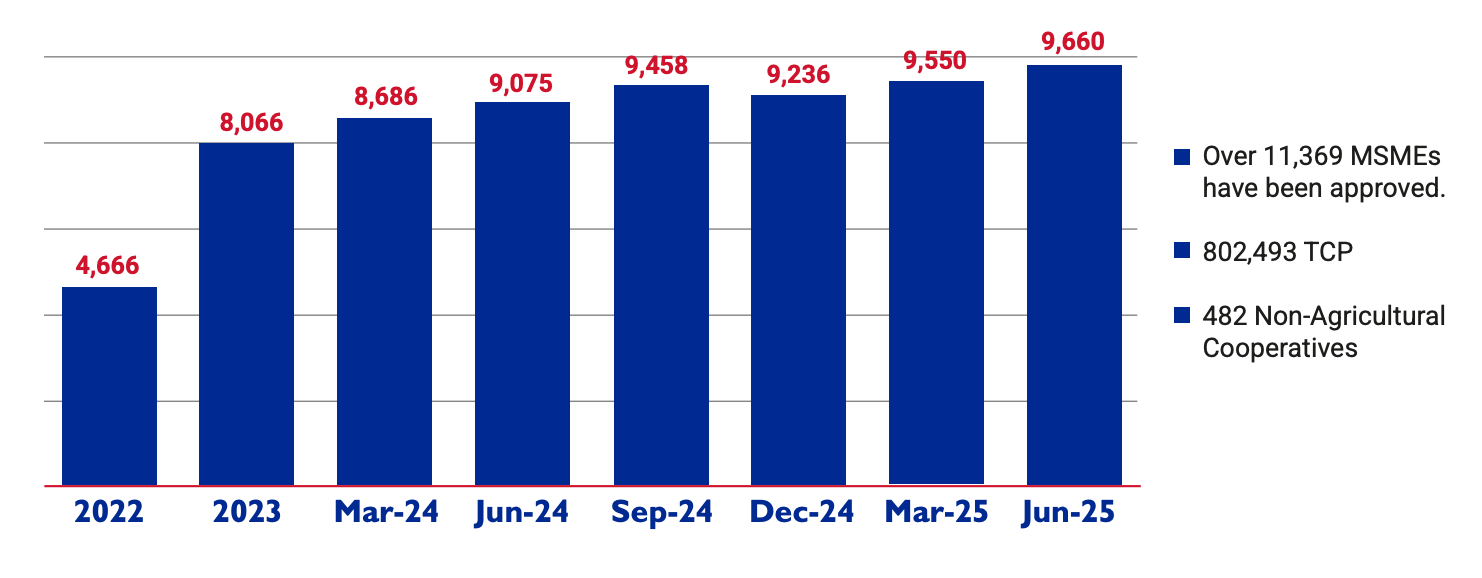
Since a 2021 reform that legalised MSMEs and replaced a narrow list of permitted activities with a broad “negative list”, more than 11,000 private firms have been approved, with roughly 9,600 still active by mid‑2025.
These businesses now span light manufacturing, construction, services and food, not just tourism. They:
Generate tens of thousands of jobs and offer goods and services the state cannot consistently provide
Pay a rising share of taxes — about 23% of total revenue by 2024 — turning them into an important fiscal pillar
Operate with more efficient, customer‑oriented and technologically savvy practices than state enterprises, often using diaspora finance and informal credit to circumvent the state banking system.
But their expansion is tightly constrained. Since mid‑2024, approvals of new MSMEs have been effectively frozen, signalling official anxiety about losing control and turning administrative decisions into a hard political ceiling.
Private firms face volatile regulation, high and sometimes arbitrary taxes, sudden price controls, and legal insecurity that can shut down a business overnight. They are barred from strategic sectors like energy, telecommunications and large‑scale finance, and denied a clear legal route for foreign investment.
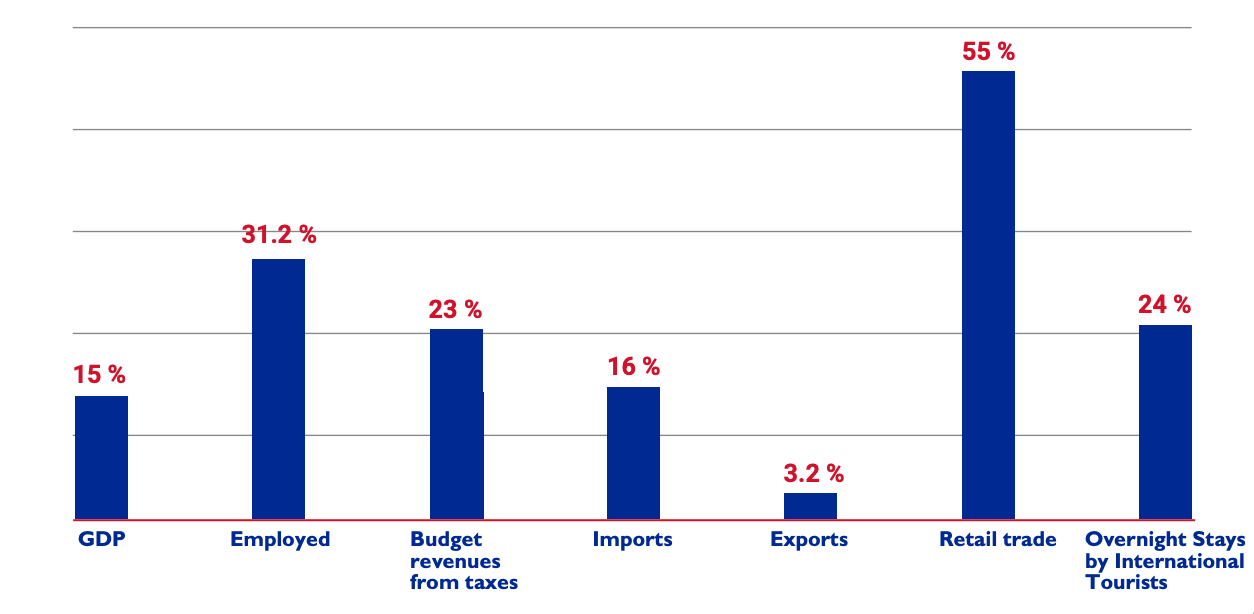
This leaves the private sector in an ambiguous role: a pressure valve that mitigates social unrest and keeps basic markets functioning, but not yet an engine of development capable of transforming the system.
Why this matters for the regime change narrative
For Washington, the coexistence of a brittle state sector, a disciplined security apparatus and a dynamic but stunted private economy shapes both ambition and caution.
The US sees opportunity: a growing class of entrepreneurs and middle‑class aspirants who have a material interest in clearer rules, property rights and integration with international markets — goals broadly aligned with US preferences. At the same time, it recognises that the Cuban state still has the coercive capacity to crush dissent and the ideological reflex to rein in any actor that threatens its monopoly on power.
That is why the current push for “regime change” is likely to centre not on tanks on Havana’s Malecón, but on a grinding strategy: tightening the economic vise, nudging Havana toward deeper space for private enterprise and external capital, and trying to ensure that when change does come, it produces a less hostile, more market‑friendly Cuba — rather than a sudden vacuum on America’s doorstep.
Following the capture of Maduro by US forces on January 3rd, the White House has imposed an oil blockade on Cuba and threatened the use of tariffs and trade retaliation on any country that breaks the blockade.
With the last oil shipment received on January 9th, Cuba is fast running out of fuel and the UN has warned of a possible humanitarian collapse.
Washington has tremendous leverage — but not a free hand. Tomorrow I’ll look at what the United States will actually try to extract from Havana.